
The Short Answer
A quick seasonal routine — look, tighten, lubricate, test, and seal — is enough to keep most garage doors running smoothly through an Illinois winter. It takes about 20 minutes, uses tools most homeowners already own, and catches small problems (a loose bracket, a dry hinge, a worn seal) before the cold turns them into a broken spring or a door that won't close.
Garage doors in this part of Illinois take a beating from big seasonal swings: humid summers that swell wood and rubber, then cold winters with ice, salt, and road grime that get tracked straight into the garage. Doing this check once per season, especially right before winter, is the cheapest insurance you'll find against a 6 a.m. no-start on a freezing morning.
What You'll Need
- A socket wrench or ratchet set
- Silicone-based garage door lubricant (not WD-40 or household oil — they attract dust and grime)
- A soft, dry cloth
- Work gloves
- A flashlight
- A broom or shop vacuum
The 20-Minute Routine
- Look the door over, inside and out. Open the door and walk its full length, checking for dents in panels, rust spots, frayed cables, and gaps where the door meets the frame. On older doors, pay attention to the bottom panel — that's where road salt and slush splash up all winter and cause the most corrosion.
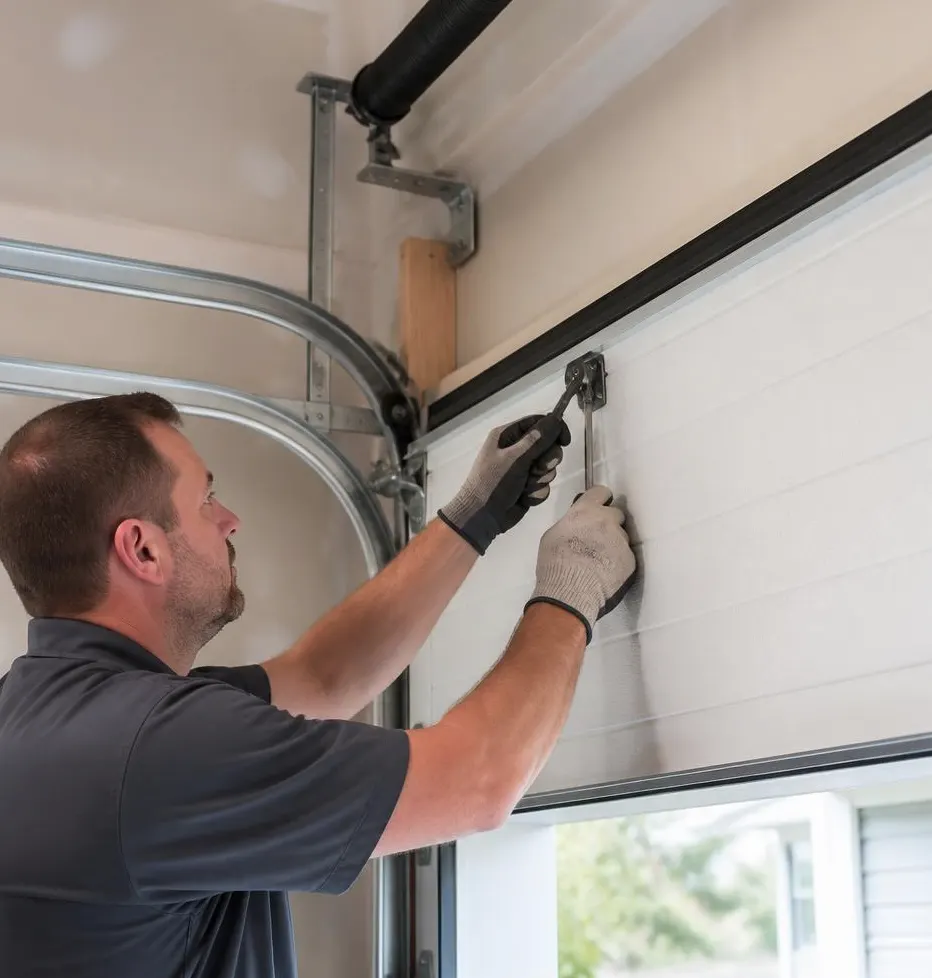
- Tighten the visible hardware. Using your socket wrench, go over the roller brackets, hinges, and the bolts holding the tracks to the wall. Doors loosen up naturally from the vibration of daily use and from the expansion and contraction that comes with seasonal temperature swings. Do not touch anything connected to the torsion spring itself — that's a job for a technician, covered below.
- Lubricate the moving parts. Spray a light coat of silicone-based lubricant on the rollers, hinges, and the length of both tracks. Wipe off any excess with your cloth so it doesn't collect dust and grit. This single step does more to prevent squeaking and sticking through a cold winter than almost anything else on this list, since metal parts contract in the cold and need every bit of smooth movement they can get.
- Test the auto-reverse safety feature. Place a 2x4 flat on the ground where the door would close, then run the door down. It should reverse the moment it touches the board. Next, test the photo-eye sensors near the bottom of the tracks by waving a hand or broom through the beam while the door is closing — it should stop and reverse immediately. If either test fails, stop using the opener until it's fixed; this is a real safety issue, not a cosmetic one.
- Clean the photo-eye sensors. Wipe the small lenses on each side of the track with a soft, dry cloth. Dust, cobwebs, and condensation are a common cause of a door that refuses to close for no obvious reason, and it's an easy five-second fix most people never think to check.
- Check the weatherstripping and seals. Run your hand along the rubber seal at the bottom of the door and the weatherstripping along the sides. Look for cracking, flattening, or gaps you can see daylight through. Going into winter, a worn seal lets in cold air, moisture, and the salt spray that gets kicked up off the driveway — all things that accelerate rust on tracks and hardware.
- Do a manual balance check. Pull the release cord to disconnect the opener, then lift the door by hand about halfway. It should stay in place on its own. If it drifts down or shoots upward, the spring tension is off, and that's your cue to stop and call a professional rather than adjust it yourself.
Where a Homeowner's Job Ends
Everything above is safe to do with basic tools and a little patience. What's not safe to do yourself: anything involving the torsion or extension springs, the lift cables, or a door that's visibly off-balance. These parts are under heavy tension, and an improperly adjusted spring or cable can cause serious injury. Misaligned tracks, worn rollers that need full replacement, and opener force or limit settings that are out of spec are also better left to someone who does this for a living — a small adjustment made wrong can shorten the life of the whole system.
When to Call Trenton Garage Door
If your balance test comes back off, a cable looks frayed, or the door is grinding, slamming, or reversing on its own with nothing in the way, it's time to call in a technician rather than keep testing it yourself. Trenton Garage Door handles garage door maintenance visits that cover everything above plus the parts homeowners shouldn't touch, and if the issue turns out to be spring-related, our spring replacement service gets it handled safely and correctly the first time — important heading into a winter where a broken spring means a door that won't open at all.
If your garage door needs a closer look before the cold weather sets in, give Trenton Garage Door a call. We serve Trenton, Breese, New Baden, Aviston, Highland, Lebanon, Mascoutah, and Germantown, and we're happy to walk through a full seasonal check with you.